
Lumen
Collecting, organizing, and illuminating user feedback to highlight key insights.
Background
Lumen was born out of LavaLab, USC’s premier product incubator. Our team of four had 8 weeks to go from idea to working product. I came in as PM and cofounder, meaning I was responsible for figuring out what we were building, why it mattered, and making sure we actually shipped it.
The idea came from a real pain point I noticed while working closely with product teams. Everyone talks about being “user-driven,” but in practice, most teams are drowning in fragmented feedback spread across dozens of channels. I wanted to solve that.
The Problem
User feedback is everywhere. Instagram comments, tweets, App Store reviews, support emails, Slack messages. And that’s the problem. It’s scattered across so many platforms that no one has a clear picture of what users are actually saying.
I ran 50 interviews with PMs and UX researchers across different companies. Every single one described the same thing: hours spent manually copying feedback from different sources into spreadsheets, trying to find patterns. One example that really stuck with me was from The StoryGraph. Just 2 Instagram posts had over 300 comments with genuine product feedback buried in them. Nobody had the time to read through all of that.
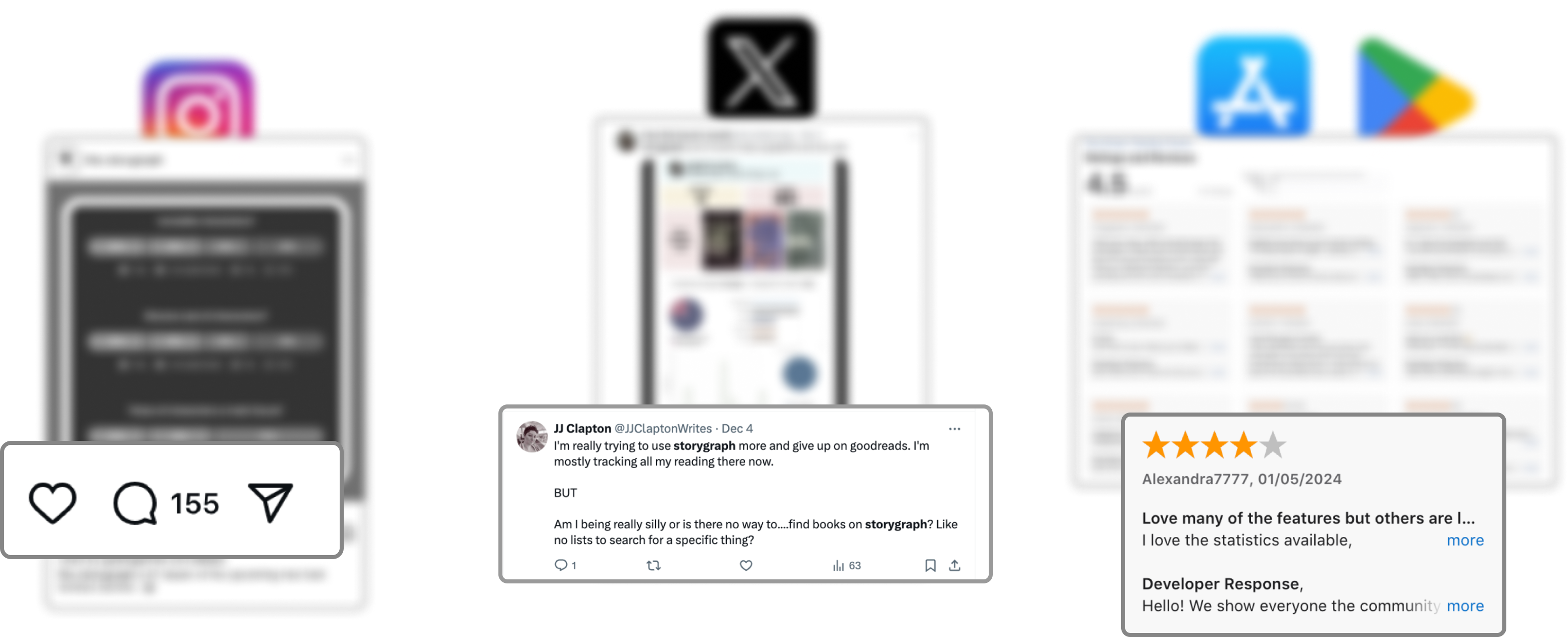 User feedback lives across Instagram, X, and app store reviews with no single source of truth
Concept
The core concept behind Lumen is simple: what if all your user feedback lived in one place and organized itself? We built an AI-powered platform that automatically pulls feedback from social media and app stores, then uses natural language processing to group similar feedback into consolidated insights.
On the technical side, we built scrapers for Instagram, X, and the major app stores that run on a scheduled basis. Incoming feedback gets classified by type (feature request, bug fix, improvement, positive sentiment) and mapped to its original source for full traceability. The AI layer clusters related feedback together, so instead of reading 300 individual comments, you see one insight card that says “users want stronger social features” backed by 325 data points.
We also built an embeddable widget that product teams can drop into their own apps, giving users a direct channel to submit feedback that flows straight into the same dashboard. This was important because not all feedback is public, and we wanted to capture the stuff that doesn’t make it to social media.
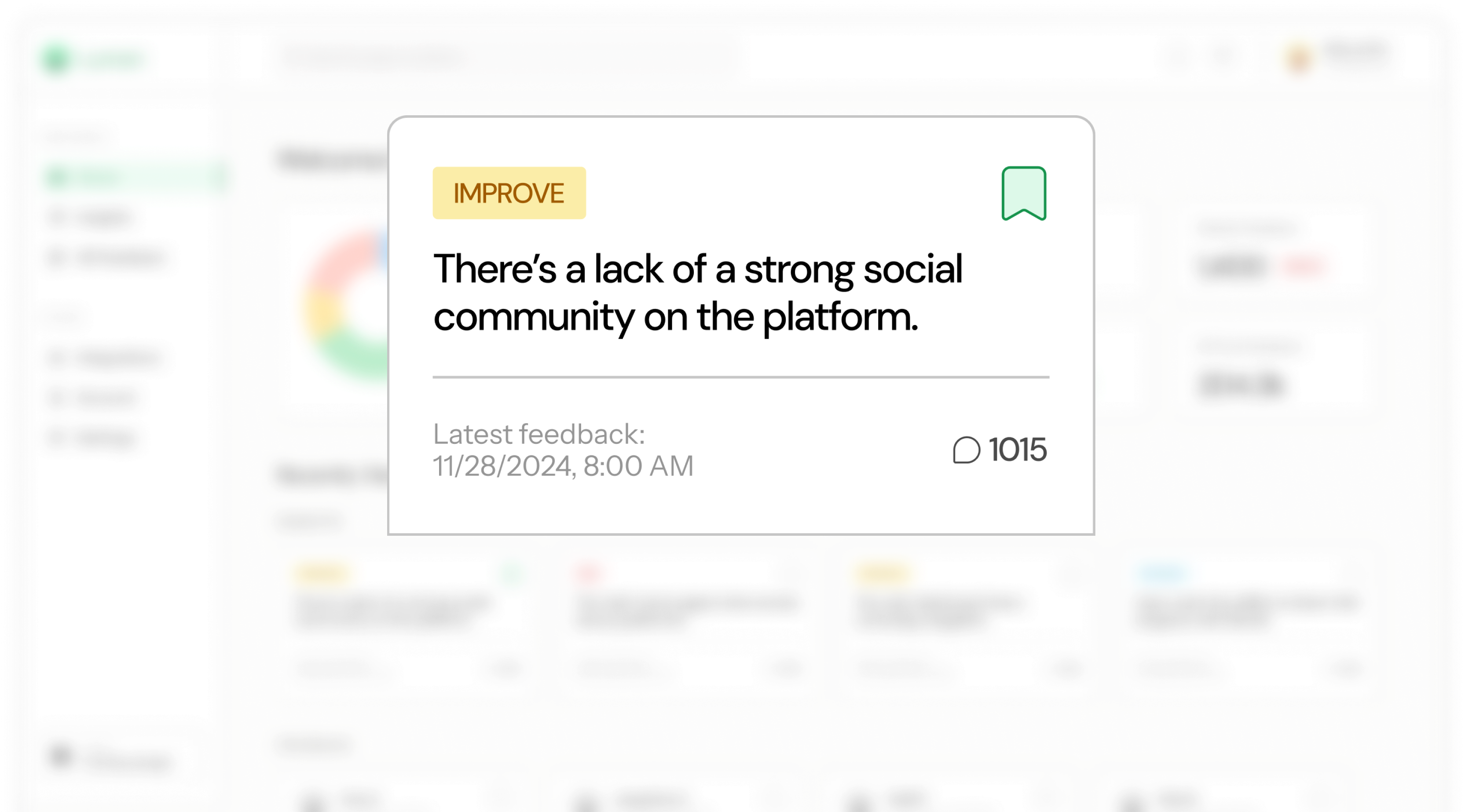 Insight cards group related feedback with AI
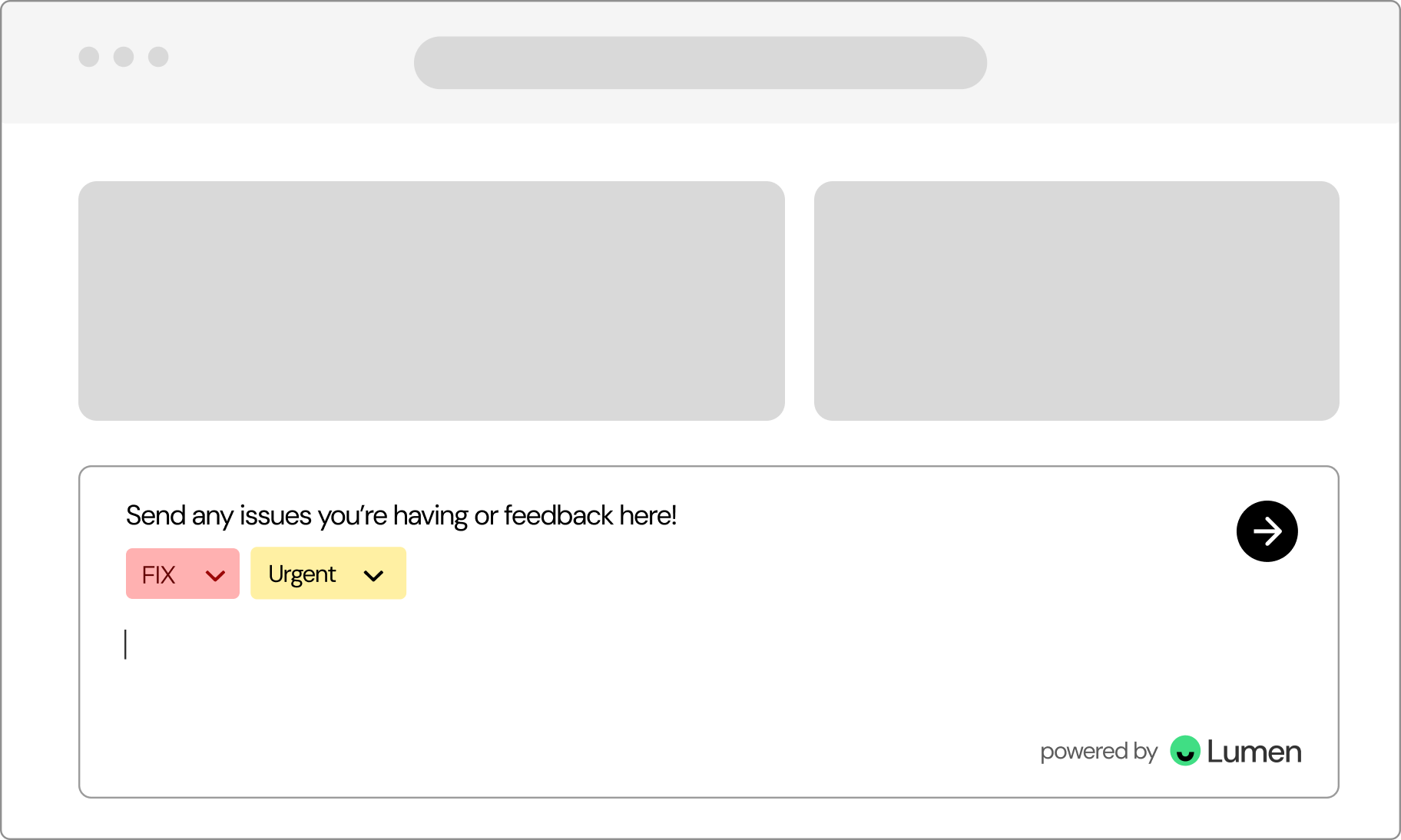 Embeddable widget for direct user submissions
The Product
The final product is a dashboard that gives product teams immediate clarity on what their users care about. Here’s what it looks like in practice.
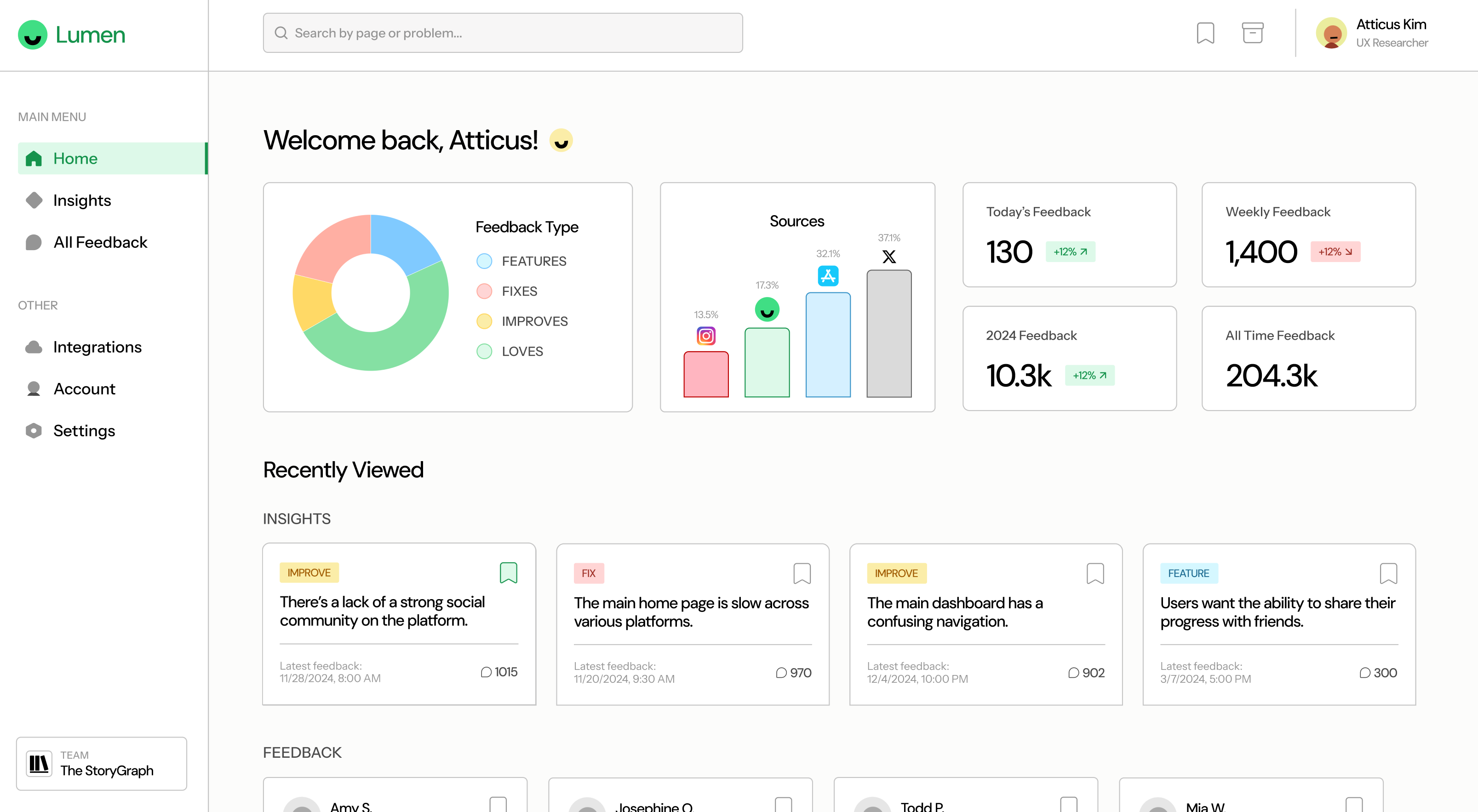 Home dashboard with feedback analytics, source breakdown, and trending insights
Automatic Scraping
Pulls feedback from Instagram, X, and app store reviews on a schedule. No more manually checking every platform.
AI Insight Grouping
Clusters similar feedback into single insight cards. 300 comments become one actionable takeaway.
Source Traceability
Every insight links back to the original comments and reviews, so you can always check the context.
Direct Submission
An embeddable widget captures feedback from inside your product, catching what never makes it to social media.
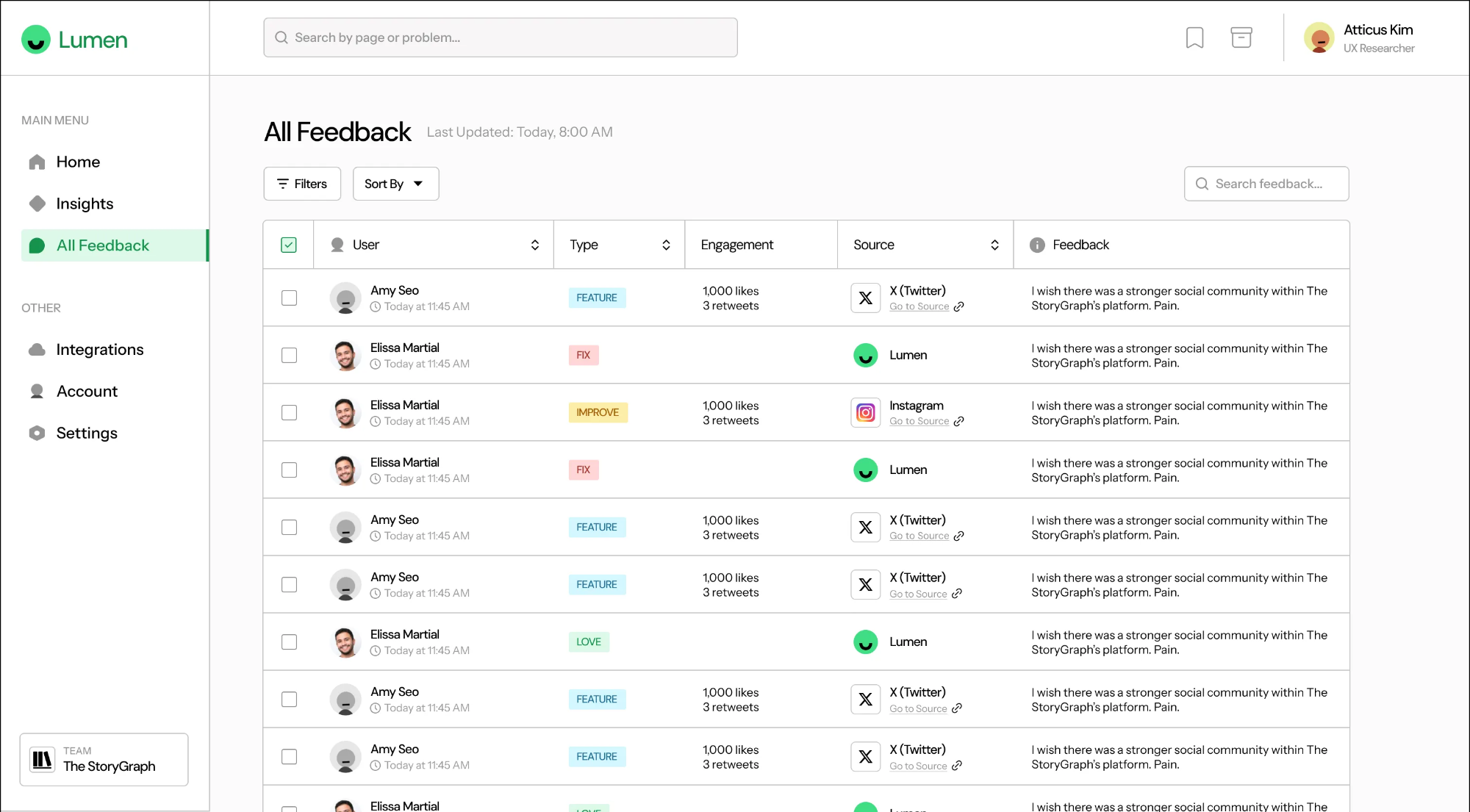 All Feedback view with sorting and filters
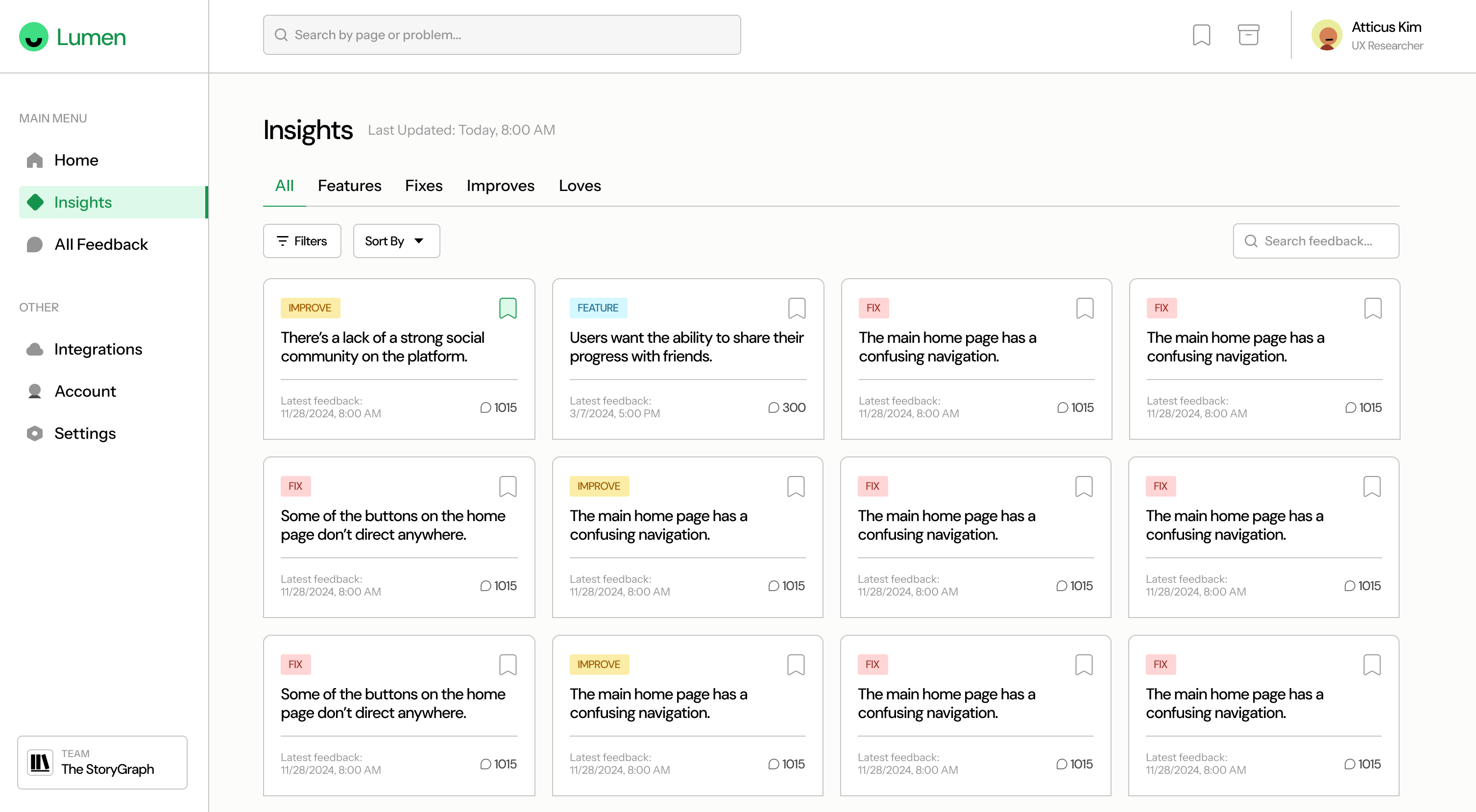 Insights view with categorized cards
 Insight detail view with AI-generated highlight summarizing 325 inputs
What I Learned
Building Lumen in 8 weeks taught me more about product management than any class could. Here are the things that stuck with me.
Branding sells the product before the product does
We invested in Lumen’s identity early. The name, the logo, the green color palette. It sounds superficial, but at demo day, judges understood what we were building before we even opened the app. Strong branding communicates credibility and purpose instantly.
Simple systems ship faster
I kept pushing for simplicity in our design system. Fewer components, consistent patterns, clear hierarchy. This made it significantly easier for our engineers to build quickly without constantly asking design questions. Constraints are a feature.
The PM role is everything in between
I wrote copy, built pitch decks, ran user interviews, resolved disagreements about scope, and debugged API issues at 2am. Being a PM at a startup is not a defined role. It’s whatever the team needs you to be at any given moment.
Build what people tell you they need
There’s an irony in building a feedback tool and learning that the most important thing is to actually listen to feedback. Every major decision we got right came from talking to users. Every misstep came from assuming we knew better.

The Team
Built at LavaLab, USC’s student-run product incubator. Fall 2024.